Persian Pumpkin Seeds
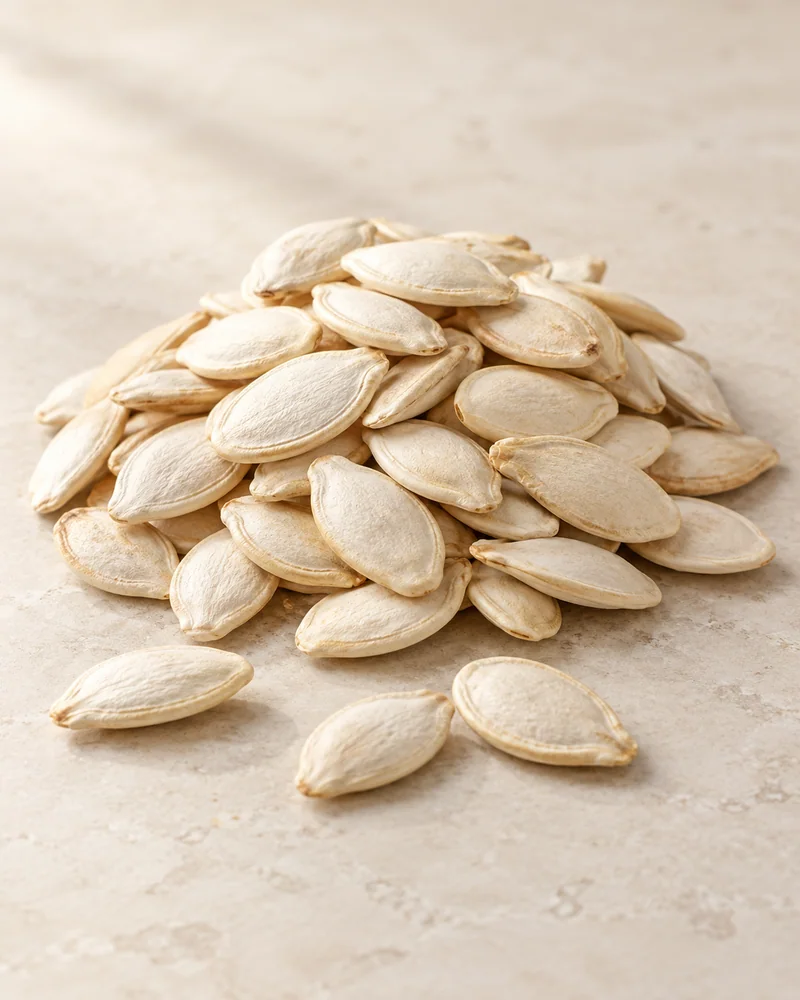
White-shelled pumpkin seeds roasted with salt — the original Persian tokhmeh.
HS 2008.19Details & enquiry
Iranian dates, nuts & dried fruit.
Ask about availabilitySeeds · Tokhmeh · product guide
In Iran, cracking seeds is a social ritual. Tokhmeh — roasted pumpkin, watermelon and sunflower seeds in the shell — fill bowls at family gatherings, on long drives, and in every living room during a big football match.
Tokhmeh is the Persian word for roasted seeds eaten in the shell — mainly pumpkin (tokhmeh kadoo), watermelon (tokhmeh hendevaneh) and sunflower (tokhmeh aftabgardan). Each seed is cracked between the front teeth, the kernel eaten and the shell discarded. They are brine-roasted, lightly salted and central to Iranian gatherings.
Products
These are product types in our developing range. Ask us about current availability, origin, grade and packing before ordering.
White-shelled pumpkin seeds roasted with salt — the original Persian tokhmeh.
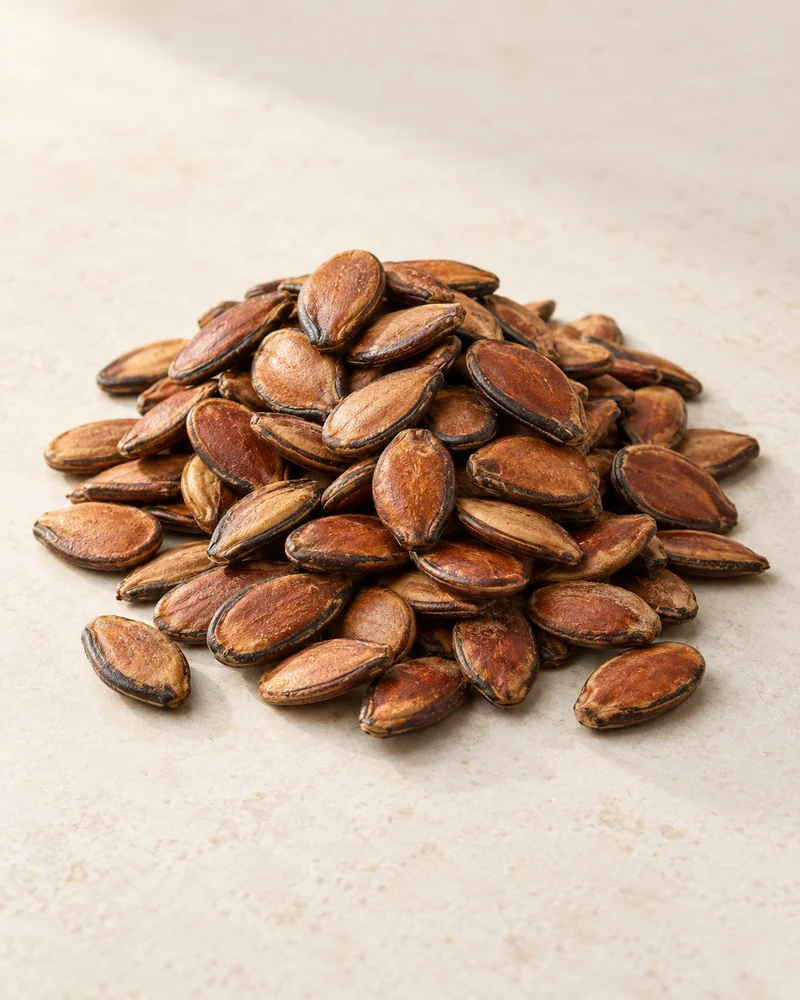
Glossy dark watermelon seeds, roasted and lightly salted — small, savoury, addictive.

Striped sunflower seeds from Urmia, roasted and salted — light, crunchy, endlessly snackable.
| Product | Grades | Packaging | MOQ | Supply | HS code |
|---|---|---|---|---|---|
| Persian Pumpkin Seeds | Extra large · Large | Discuss available packing | Confirm on enquiry | Seasonal | 2008.19 |
| Roasted Watermelon Seeds | Jumbo · Large | Discuss available packing | Confirm on enquiry | Seasonal | 2008.19 |
| Urmia Sunflower Seeds | Large confectionery | Discuss available packing | Confirm on enquiry | Seasonal | 2008.19 |
Buyer’s guide
Every Iranian has a favourite. Here is how the three classic tokhmeh compare.
Broad, white and flat with a defined rim. The kernel is large, green and nutty, and the shell cracks cleanly — the most generous seed for your effort.
Small, glossy and dark. Harder to master, richer to eat, and the connoisseur’s choice — the one you will see on every Yalda table.
Striped, light and quick to crack. The easiest place to start, and the most moreish once you get going.
Hold the seed upright, pointed end up, between your front teeth. Bite gently on the edge until it splits, then use your tongue to pop out the kernel. Discard the shell. Repeat — faster each time.
Etiquette is simple: one bowl for seeds, one for shells. In Iran a small dish is always set out next to the tokhmeh.
Salt levels and preparation vary by producer. Tell us if you are looking for raw, roasted or salted seeds.
Seeds stay crisp for 2–3 months in a sealed bag. Once opened, fold the pouch closed or tip into a jar.
Origin
The fertile plain west of Lake Urmia is one of Iran’s main sunflower-growing areas, and the city is famous for noghl — slivers of almond slowly tumbled in sugar syrup, a fixture of weddings and of sweet ajil.
On the green, rain-soaked slopes south of the Caspian Sea, Gilan’s Eshkevarat highlands grow Iran’s hazelnuts, while the Qazvin plain is known for its seeds and raisins — key ingredients in a bowl of salted ajil.
Nutrition
Notable: Among the richest plant sources of zinc, magnesium and iron. Typical values for pumpkin seed kernels per 100 g (USDA FoodData Central). Actual values vary by crop and roast.
FAQ
Tokhmeh are made for cracking — the shells are tough and salty, so the custom is to eat the kernel and discard the shell.
No. Pepitas are hull-less green pumpkin kernels. Persian pumpkin seeds are roasted in their white shells and eaten by cracking them open.
The kernels are rich in protein, healthy fats and minerals such as magnesium and zinc. Like any salted snack, enjoy them in reasonable portions.
Seeds and tree nuts are different products, but shared handling may introduce allergens. Confirm the allergen information for the actual product.
Explore the range
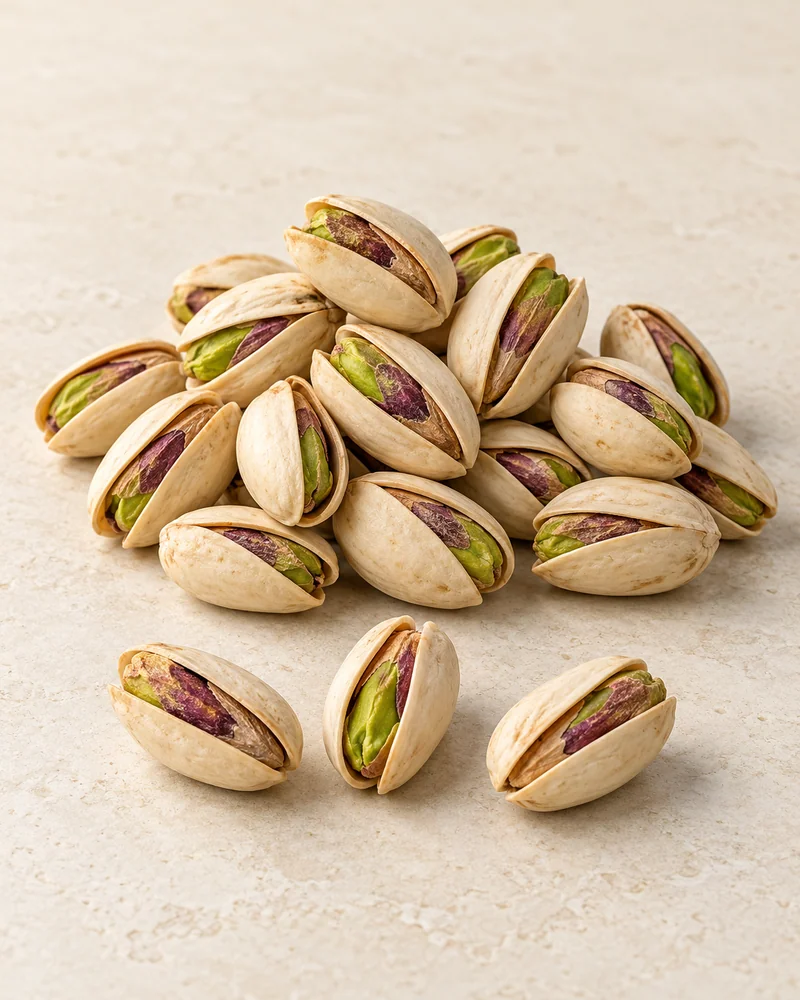
Akbari, Kalleh Ghouchi, Ahmad Aghaei & Fandoghi — explore Iranian varieties.
6 products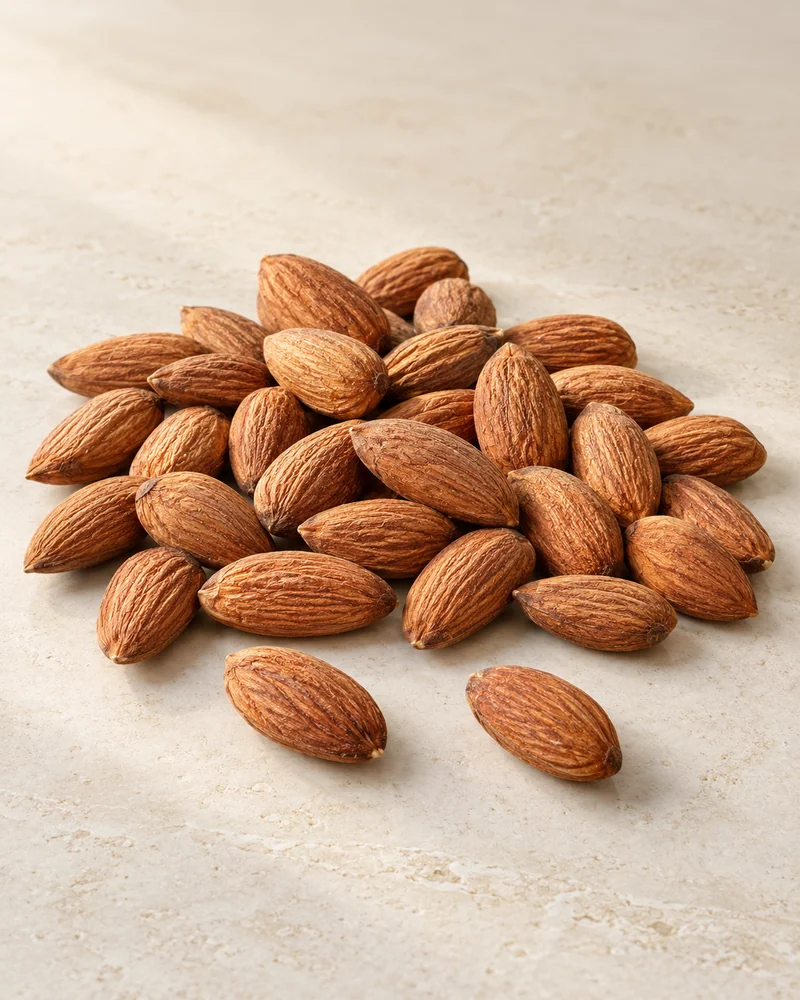
Rare Mamra kernels, paper-shell almonds and lemon-roasted classics.
3 products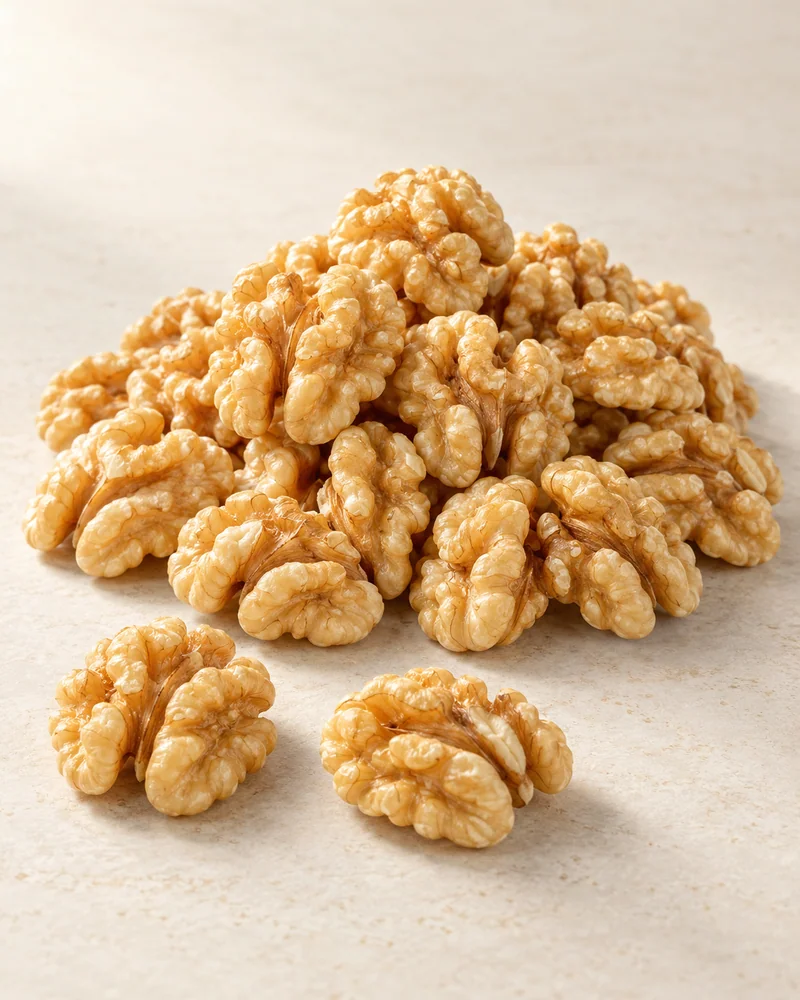
Extra Light kernels and paper-shell walnuts from Tuyserkan.
2 products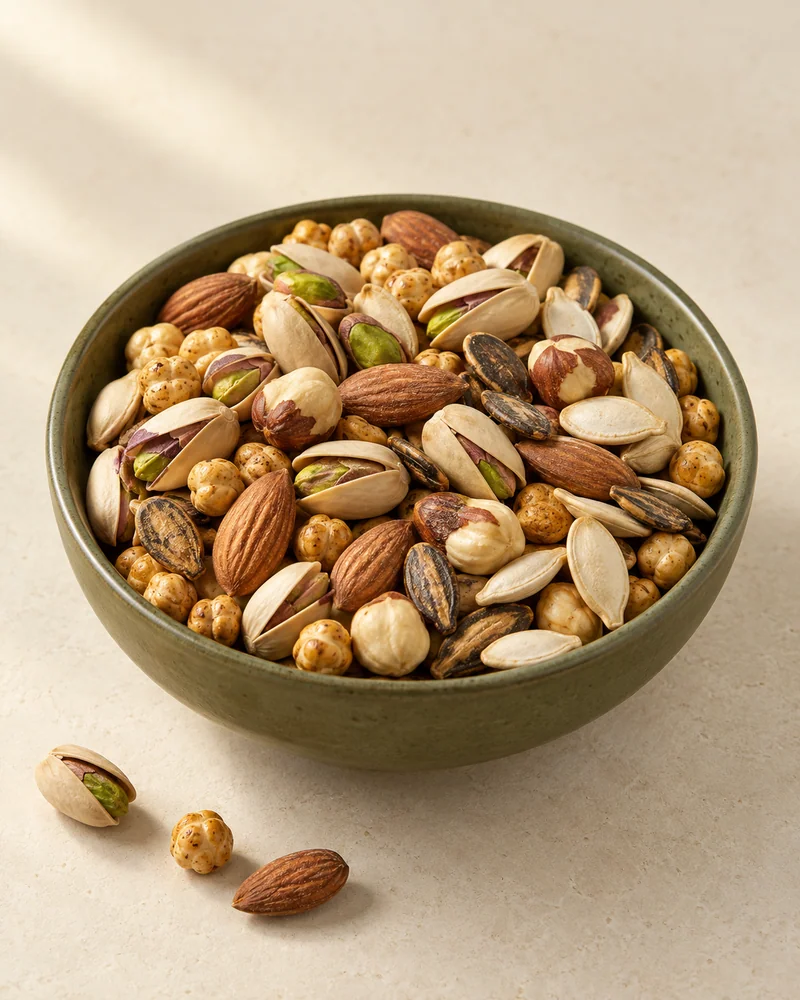
Salted, sweet and celebration ajil — hand-blended Persian mixed nuts.
3 productsReady to source?