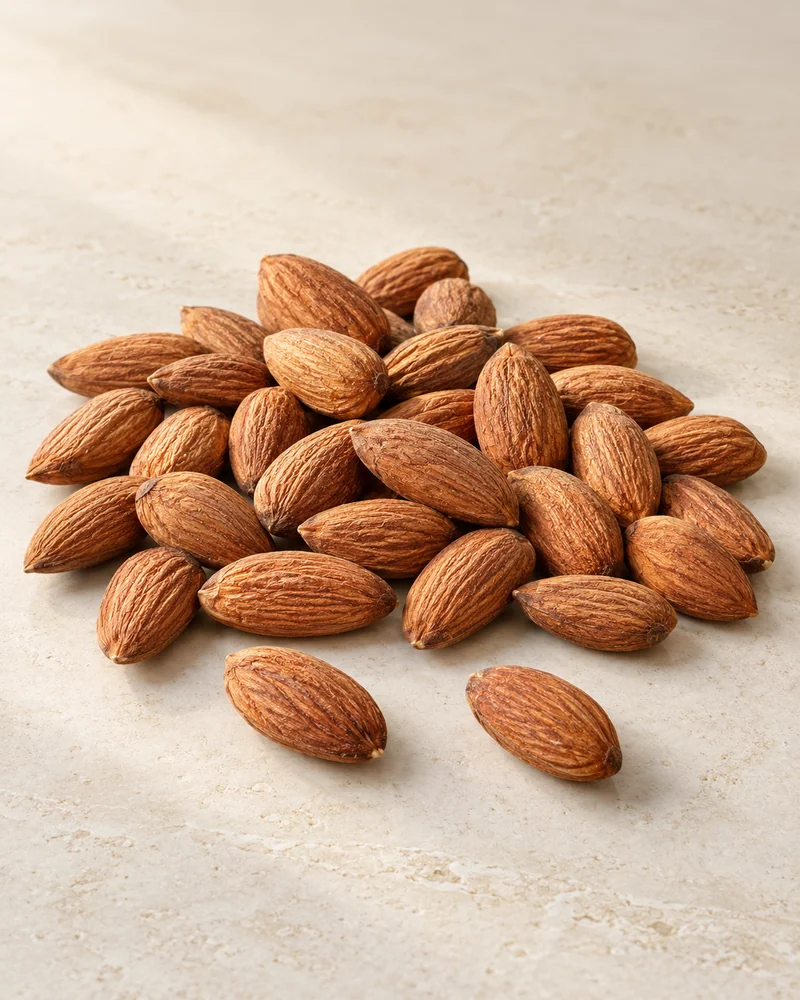
Mamra Almonds
Small, curved, oil-rich mountain almonds — the most prized almond of Iran.
HS 0802.12Details & enquiry
Iranian dates, nuts & dried fruit.
Ask about availabilityAlmonds · product guide
Iran’s almonds grow high in the Zagros mountains, where cold winters and slow summers produce small, intensely flavoured kernels. From the rare, oil-rich Mamra to thin-shelled almonds you crack by hand, these are almonds with character.
Iranian almonds (Prunus dulcis) come mainly from the high Zagros plateau — Chaharmahal & Bakhtiari, Fars and Isfahan. The most prized type is Mamra: a small, curved, deeply wrinkled kernel with unusually high natural oil content, traditionally soaked overnight and eaten in the morning.
Products
These are product types in our developing range. Ask us about current availability, origin, grade and packing before ordering.
Small, curved, oil-rich mountain almonds — the most prized almond of Iran.

In-shell almonds you can crack with your fingers — a fixture of the Persian ajil bowl.
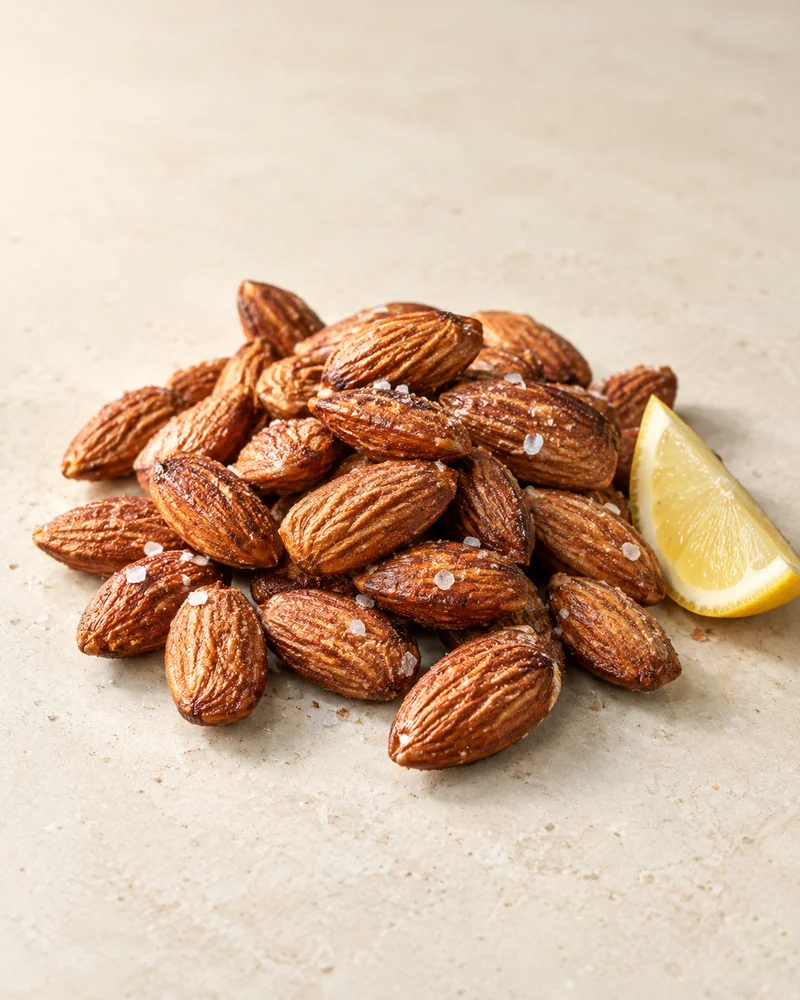
Whole almonds roasted with sour lemon and sea salt — crisp, tangy, impossible to stop.
| Product | Grades | Packaging | MOQ | Supply | HS code |
|---|---|---|---|---|---|
| Mamra Almonds | Extra (hand-picked) · Standard | Discuss available packing | Confirm on enquiry | Seasonal | 0802.12 |
| Paper-Shell Almonds | Large · Medium | Discuss available packing | Confirm on enquiry | Seasonal | 0802.11 |
| Lemon-Roasted Almonds | 20/22 · 23/25 · 25/27 | Discuss available packing | Confirm on enquiry | Seasonal | 2008.19 |
Buyer’s guide
Iranians talk about almonds by shell and by kernel. Here is what you will find in a Persian nut shop — and what each is best for.
| Type | How it looks | Texture & taste | Best for |
|---|---|---|---|
| Mamra | Small, concave, dark wrinkled skin | Oily, crunchy, deeply sweet | Soaking, gifting, snacking |
| Paper-shell (Kaghazi) | In shell; thin shell cracks by hand | Fresh, moist, mild | Ajil, cracking at the table |
| Sangi (stone-shell) | Thick hard shell | Firm kernel | Shelled for sweets & baking |
| Table almonds | Flat, even, pale skin | Crisp when roasted | Salted ajil, roasting |
Cover a small handful of Mamra almonds with water and leave overnight. In the morning the skins slip off and the kernel turns creamy and mild — a breakfast habit across Iran and South Asia.
Squeeze along the seam between thumb and forefinger. The shell gives with a soft snap — no nutcracker needed.
Processing varies by producer. Confirm whether the actual almonds are raw, roasted or pasteurised when enquiring.
Keep almonds airtight and cool. They last up to 12 months sealed, and up to 2 years in the freezer — almonds freeze better than almost any other nut.
Origin
The high Zagros plateau around Shahrekord has some of Iran’s coldest winters — exactly what almond trees need to set fruit well. Slow-growing mountain almonds here develop the rich oil content that defines Mamra-type kernels.
Nutrition
Notable: Exceptionally rich in vitamin E (about 25 mg per 100 g) and magnesium. Typical values for almond kernels per 100 g (USDA FoodData Central). Actual values vary by crop and roast.
FAQ
Mamra is a traditional type grown in Iran and Afghanistan. The kernels are smaller and more concave than common commercial almonds, with a darker skin, higher natural oil content and a richer, sweeter flavour. Yields are low, which is why Mamra costs more.
Soaking softens the kernel, loosens the skin and gives a milder, creamier texture. Many people also find soaked almonds easier to digest.
Please ask about processing for the specific almonds being offered; pasteurisation is not assumed from a variety name.
This guide concerns edible sweet almond varieties. Confirm the product identity and ingredients before purchase.
Explore the range
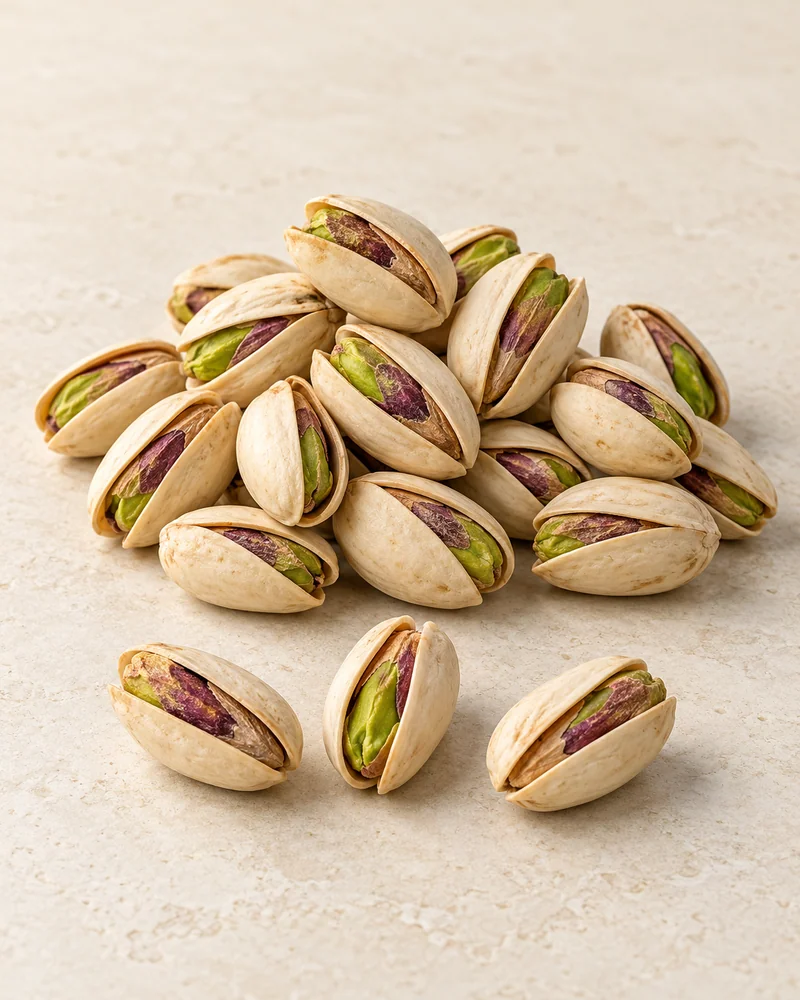
Akbari, Kalleh Ghouchi, Ahmad Aghaei & Fandoghi — explore Iranian varieties.
6 products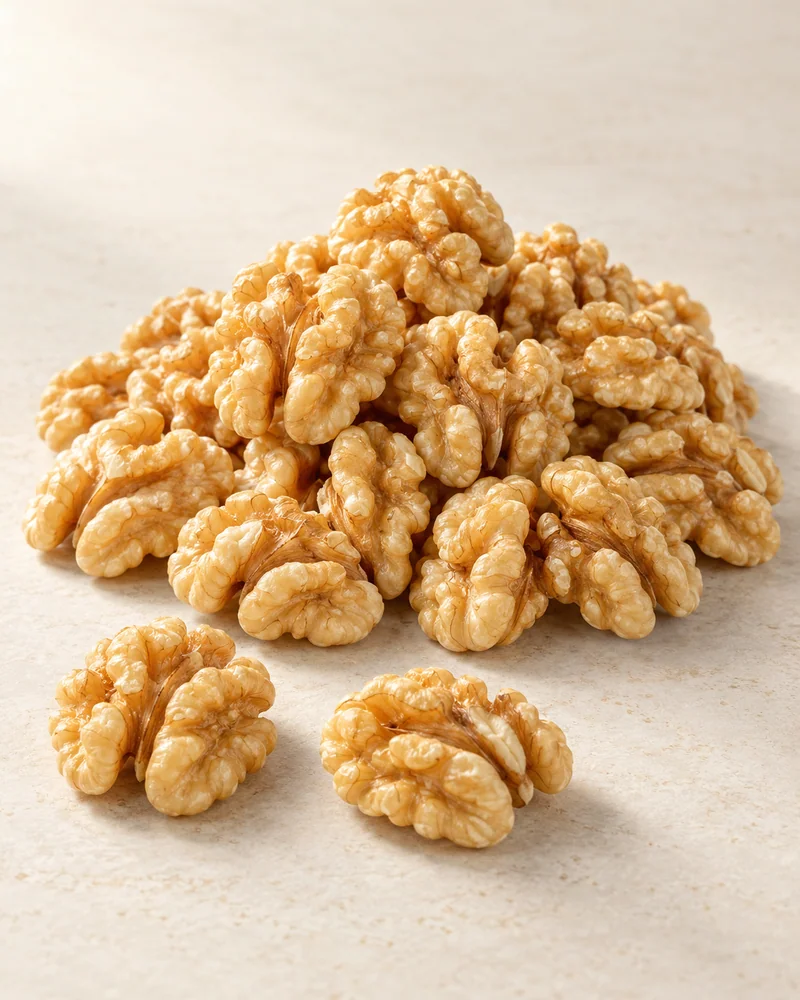
Extra Light kernels and paper-shell walnuts from Tuyserkan.
2 products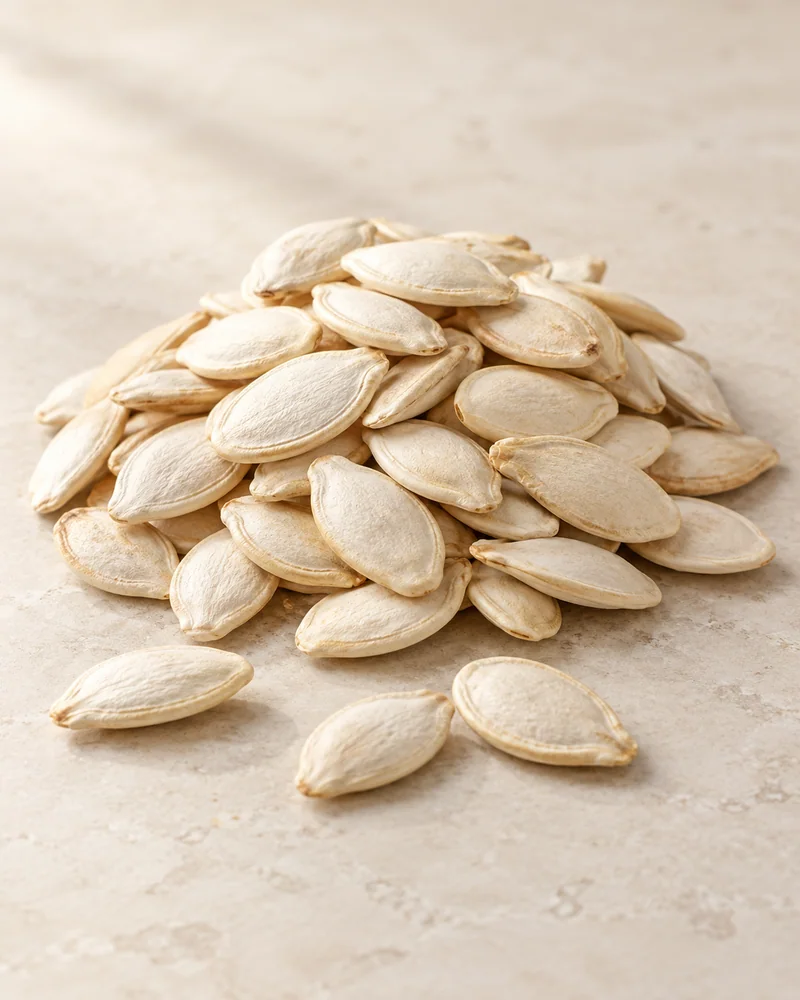
Pumpkin, watermelon and sunflower seeds, roasted Persian-style in the shell.
3 products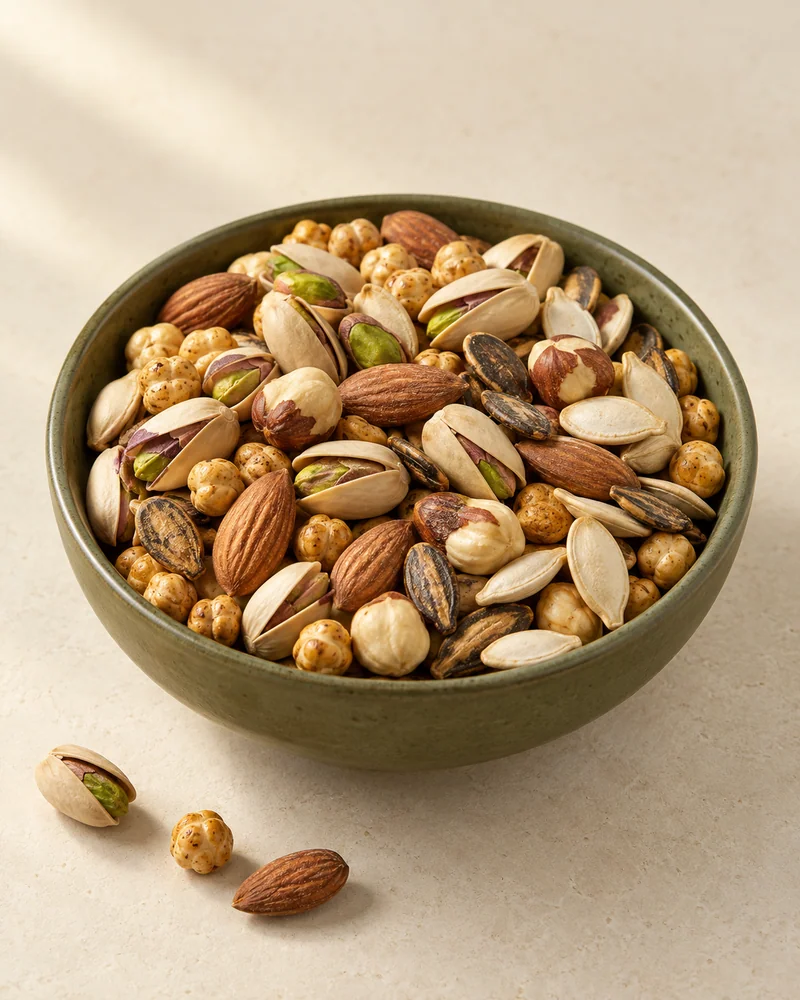
Salted, sweet and celebration ajil — hand-blended Persian mixed nuts.
3 productsReady to source?