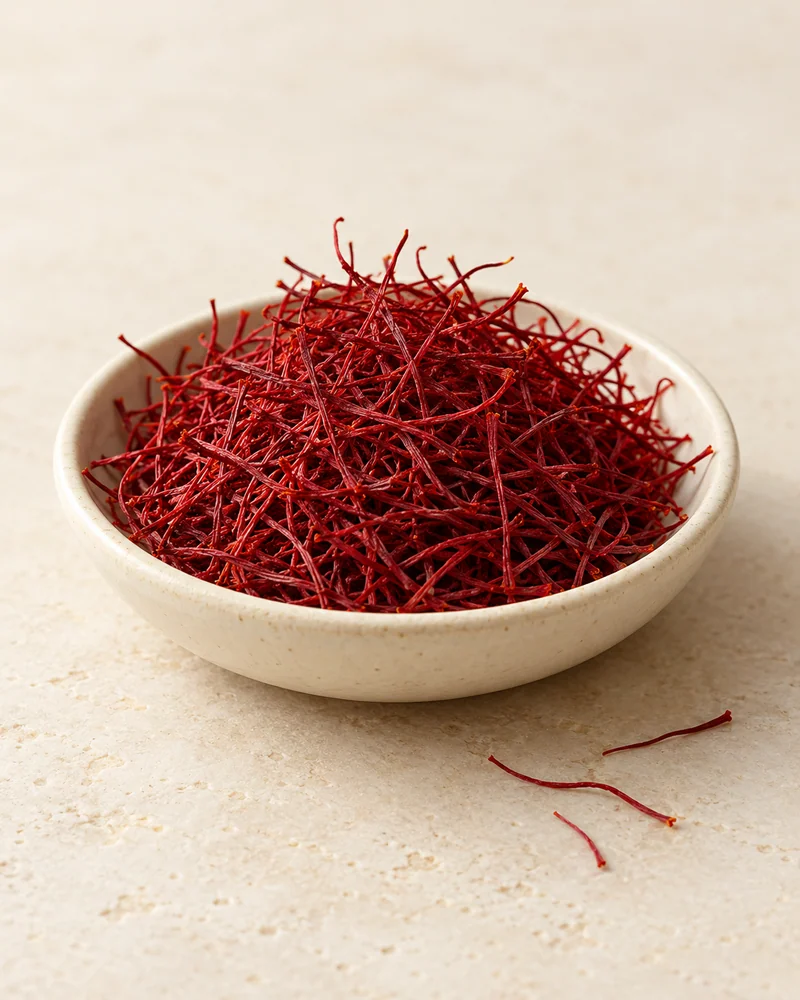
Super Negin Saffron
Iran’s highest saffron grade: long, thick, all-red threads of intense colour and aroma.
HS 0910.20Details & enquiry
Iranian dates, nuts & dried fruit.
Ask about availabilitySaffron · product guide
Each autumn, the crocus fields of Khorasan bloom for a few short weeks and are picked by hand at dawn. It takes the stigmas of well over a hundred thousand flowers to make one kilo of saffron — the most precious spice in the Persian kitchen.
Persian saffron is the dried red stigma of the Crocus sativus flower, grown mainly in Iran’s Khorasan region. Iran produces roughly 90% of the world’s saffron. Grades depend on which part of the thread is kept: Super Negin and Negin (long, all-red, trimmed threads), Sargol (all-red tips), Pushal (red with a little yellow style) and Bunch or Dasteh (whole threads).
Products
These are product types in our developing range. Ask us about current availability, origin, grade and packing before ordering.
Iran’s highest saffron grade: long, thick, all-red threads of intense colour and aroma.
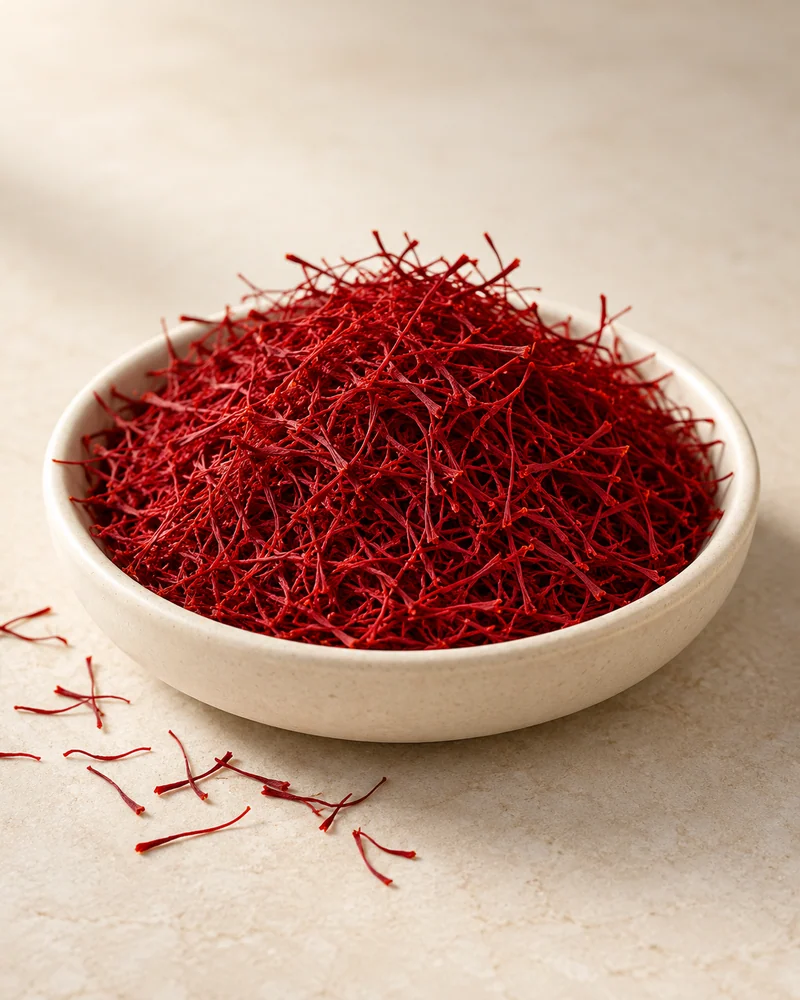
All-red saffron tips with strong colour and aroma — the everyday cook’s choice.
| Product | Grades | Packaging | MOQ | Supply | HS code |
|---|---|---|---|---|---|
| Super Negin Saffron | Super Negin | Discuss available packing | Confirm on enquiry | Seasonal | 0910.20 |
| Sargol Saffron | Sargol · all-red | Discuss available packing | Confirm on enquiry | Seasonal | 0910.20 |
Buyer’s guide
Persian saffron grades describe how the stigma is cut. The more of the pale yellow “style” that is removed, the higher the colouring strength per gram.
| Grade | What it is | Colouring strength | Best for |
|---|---|---|---|
| Super Negin | Longest, thickest all-red threads, trimmed and straight | Highest | Gifting, finishing dishes |
| Negin | Long all-red threads | Very high | Rice, tahdig, desserts |
| Sargol | All-red tips; shorter, some broken | Very high | Everyday cooking |
| Pushal | Red stigma with 1–3 mm of yellow style | High | Stews, teas |
| Bunch (Dasteh) | Whole thread with style, tied in a bundle | Medium–high | Infusions, tradition |
Grind a pinch of threads with a sugar cube in a mortar, add 2–3 tablespoons of hot (not boiling) water or an ice cube, and let it steep for 10–20 minutes. Blooming releases far more colour and aroma.
About 0.1 g — roughly 20 threads — perfumes and colours rice for four. Saffron is strong: more is not better, and too much tastes bitter.
Real threads release a golden-yellow colour slowly in water and stay red themselves. Each thread flares into a small trumpet at one end. Fakes bleed red fast or fall apart.
Keep saffron airtight, dry and dark. It is best within a year and keeps good colour for two to three years.
Origin
Eastern Iran’s Khorasan region grows the overwhelming majority of the world’s saffron. Each autumn the crocus fields around Qaen, Torbat-e Heydarieh and Gonabad bloom for just a few weeks, and the red stigmas are picked by hand at dawn. Nearby Birjand and Qaen also grow seedless barberries (zereshk).
FAQ
Each crocus flower has only three stigmas, and every one is picked and separated by hand. It takes roughly 150,000 flowers or more to make a single kilo of dried saffron.
Both are all-red. Negin keeps the whole long red stigma, neatly trimmed; Sargol keeps only the deep-red tips, so threads are shorter and more broken. Colour and aroma are similar — Negin simply looks more beautiful.
A traditional Persian unit for weighing saffron and gold: 1 mesghal = 4.608 g. Saffron is still commonly sold and gifted by the mesghal in Iran.
Buy all-red threads rather than powder, check that colour releases slowly into water, and ask for lab results. Ask what documentation is available for the specific saffron being offered.
Explore the range
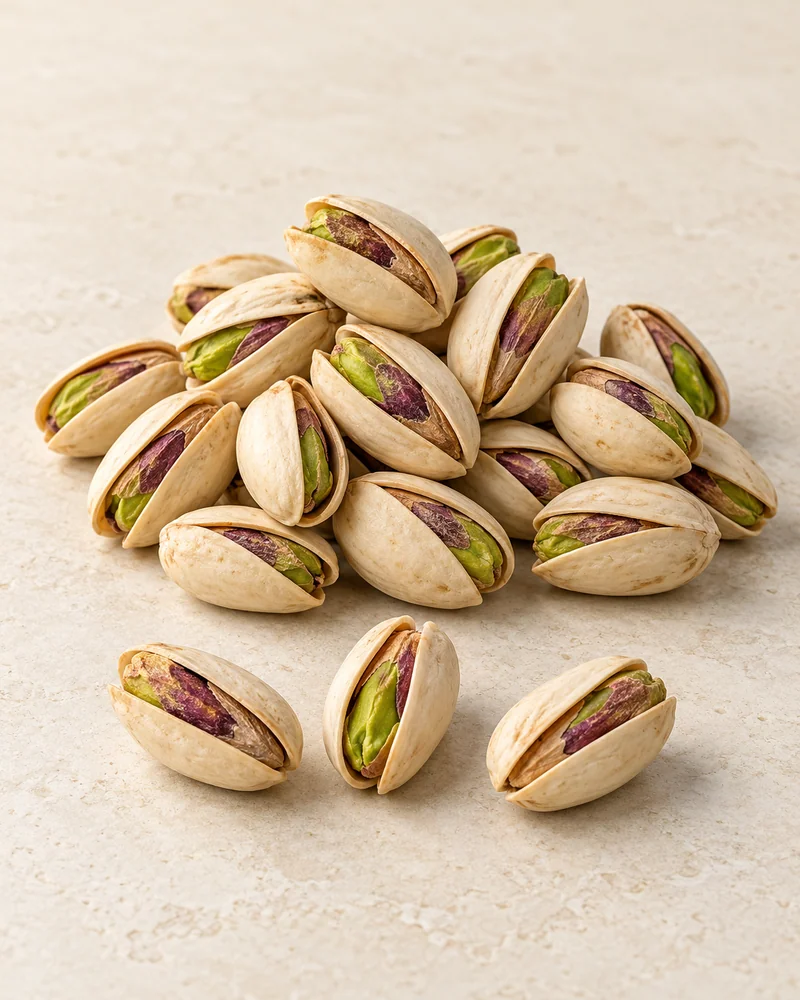
Akbari, Kalleh Ghouchi, Ahmad Aghaei & Fandoghi — explore Iranian varieties.
6 products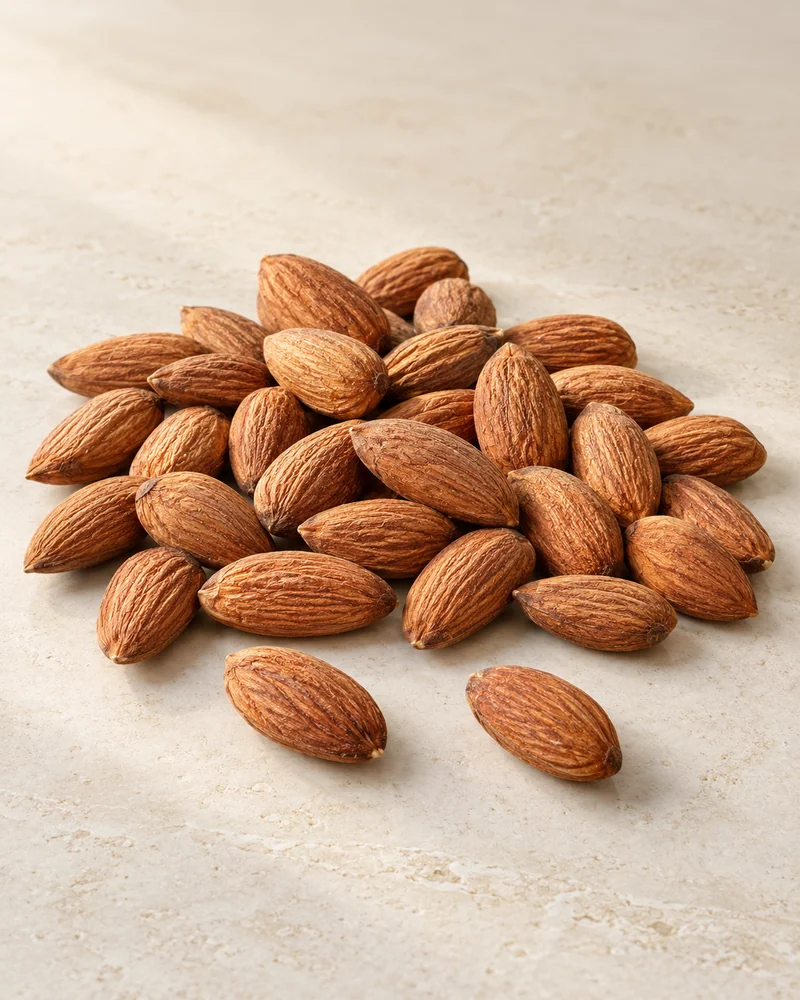
Rare Mamra kernels, paper-shell almonds and lemon-roasted classics.
3 products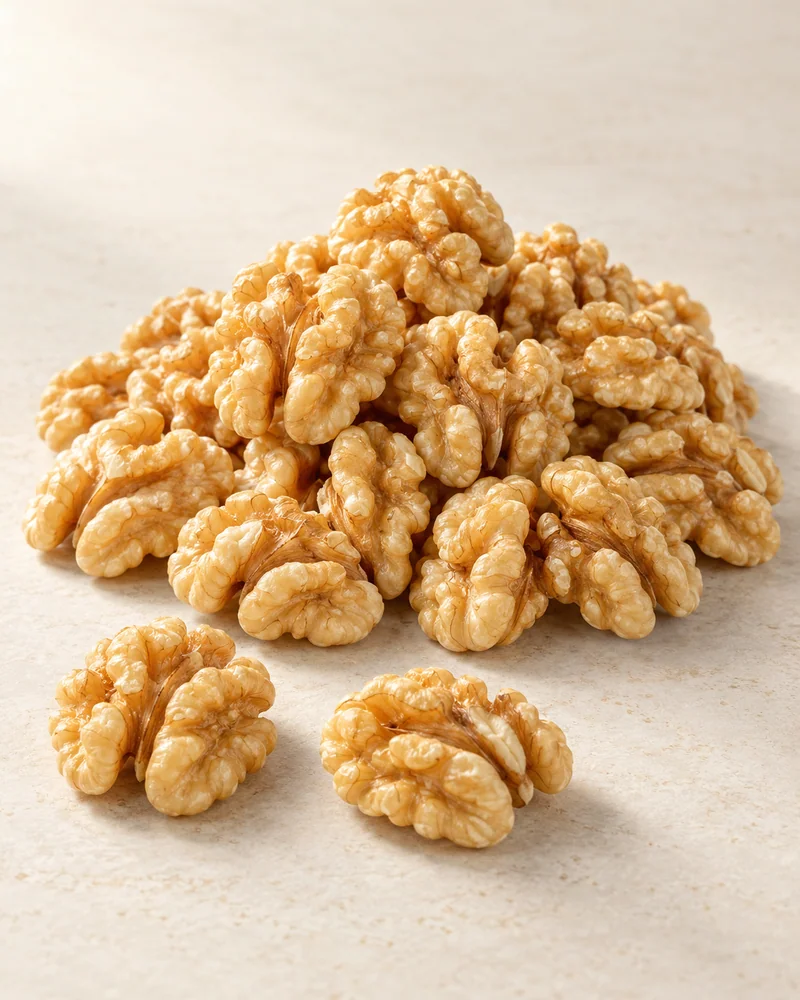
Extra Light kernels and paper-shell walnuts from Tuyserkan.
2 products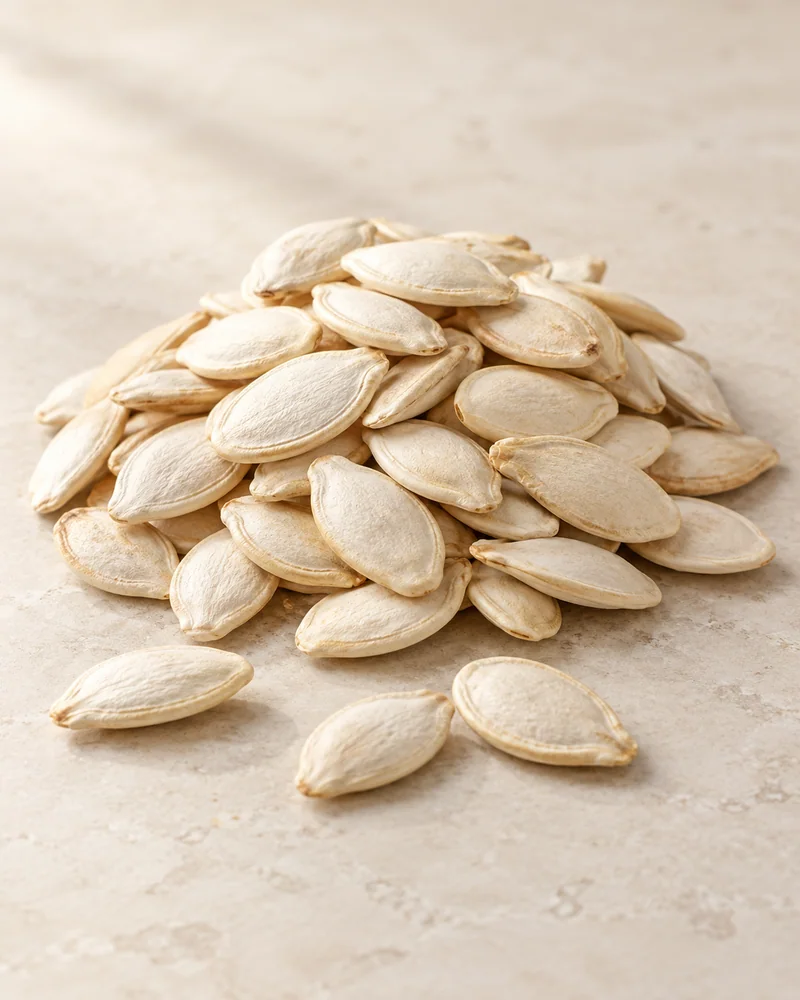
Pumpkin, watermelon and sunflower seeds, roasted Persian-style in the shell.
3 productsReady to source?