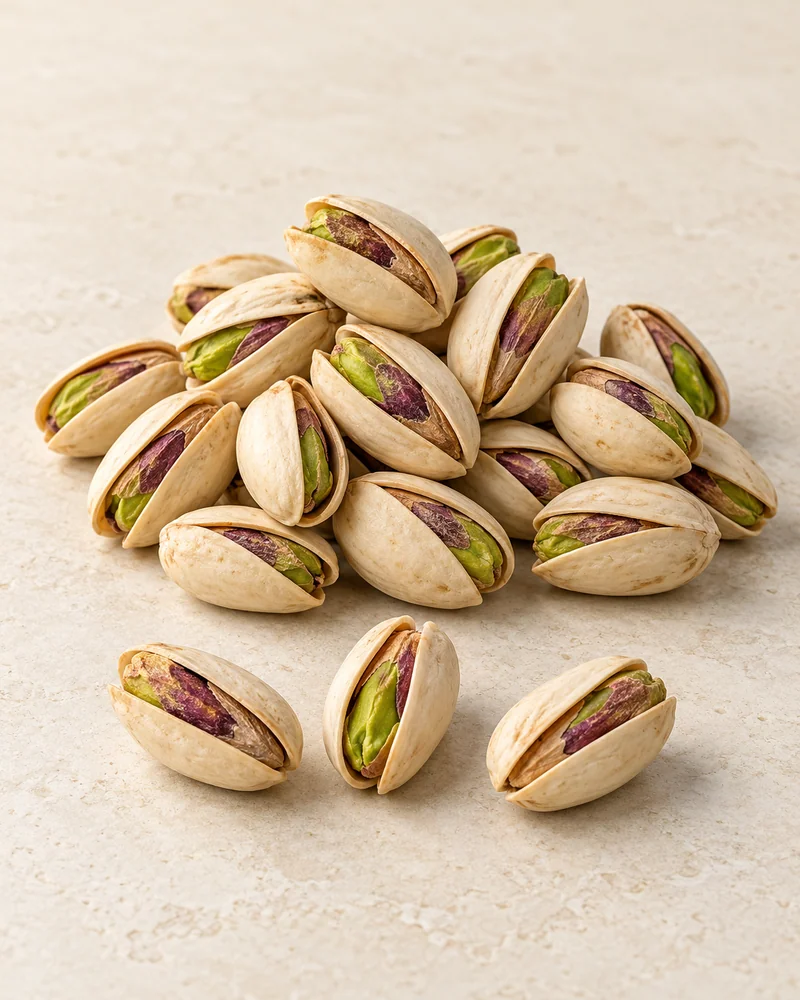
Akbari Pistachios
The longest, most elegant Iranian pistachio — buttery, sweet and naturally open.
HS 0802.51Details & enquiry
Iranian dates, nuts & dried fruit.
Ask about availabilityPistachios · product guide
Iran has grown pistachios for thousands of years, and the high desert around Rafsanjan and Kerman still produces some of the most flavourful nuts on earth. Explore the principal varieties here and contact us to discuss what can currently be sourced.
Iranian pistachios are pistachios (Pistacia vera) grown mainly in Kerman Province, around Rafsanjan, Anar and Sirjan. They are prized for a rich, buttery flavour and high natural oil content, and come in distinct varieties — long Akbari and Ahmad Aghaei, round Kalleh Ghouchi and Fandoghi — graded by the number of nuts per ounce.
Products
These are product types in our developing range. Ask us about current availability, origin, grade and packing before ordering.
The longest, most elegant Iranian pistachio — buttery, sweet and naturally open.
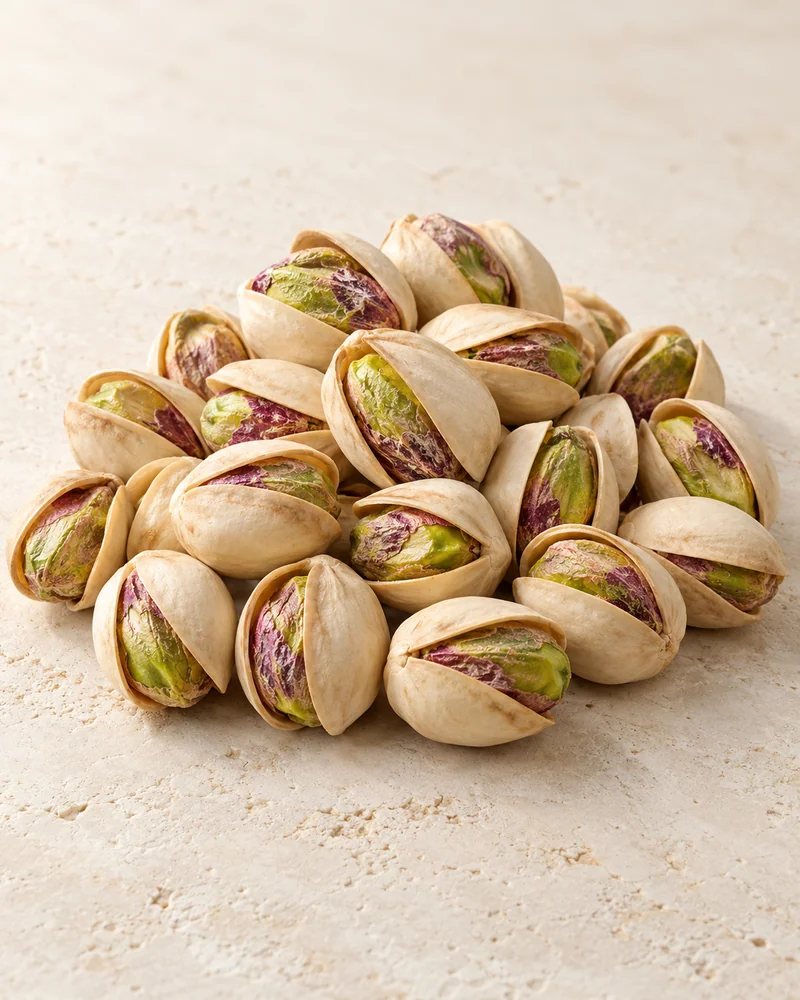
Big, round and generous — the “ram’s head” pistachio with a deep, toasty crunch.
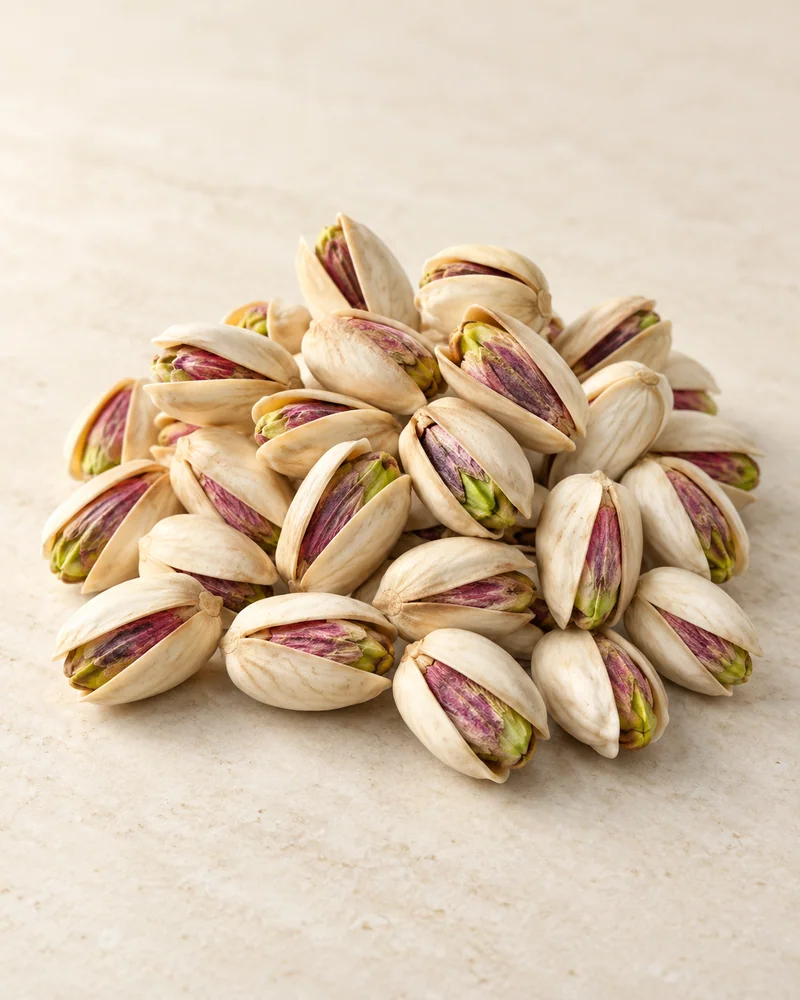
Slender, almond-shaped and pale-shelled — a refined, delicately sweet pistachio.
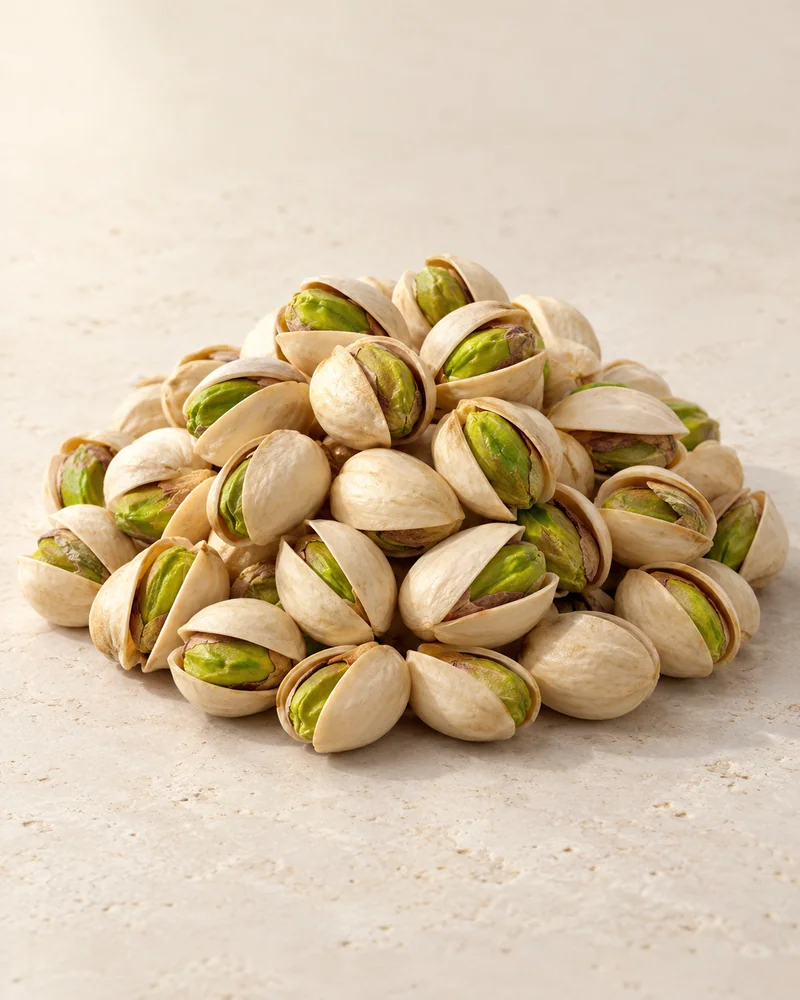
Iran’s everyday pistachio — small, round and full of classic flavour.
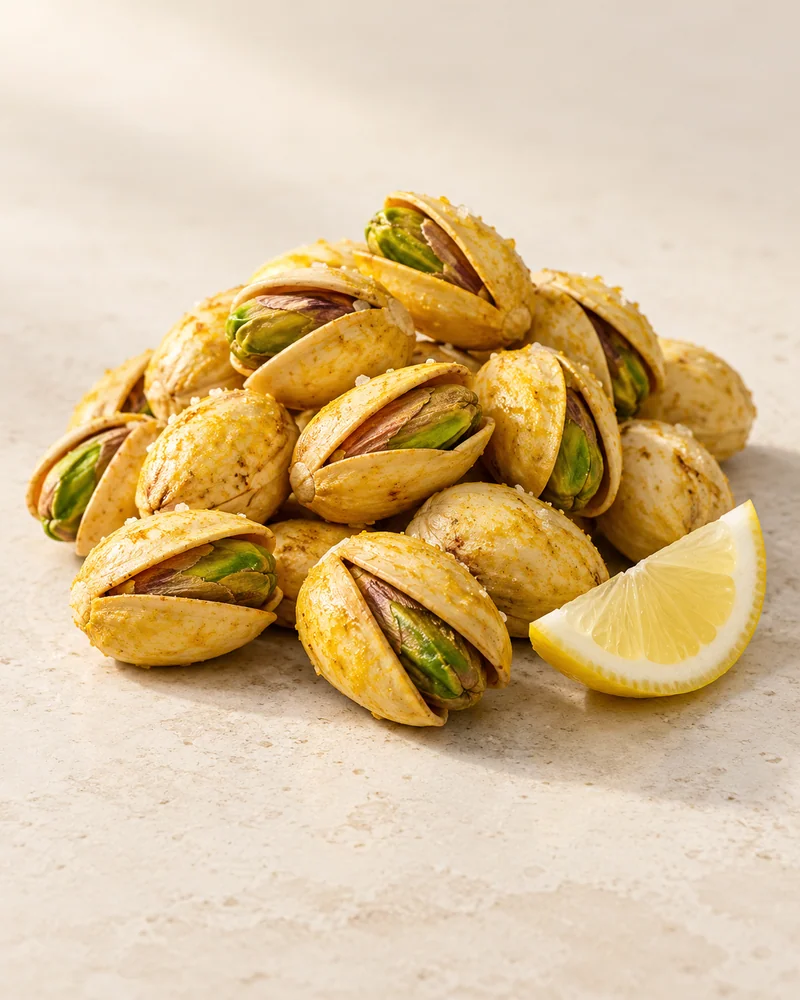
Jumbo pistachios roasted with Khorasan saffron and sour lemon — a bazaar classic.

Vivid green kernels from the early harvest — the pastry chef’s pistachio.
| Product | Grades | Packaging | MOQ | Supply | HS code |
|---|---|---|---|---|---|
| Akbari Pistachios | 18–20 · 20–22 · 22–24 · 24–26 | Discuss available packing | Confirm on enquiry | Seasonal | 0802.51 |
| Kalleh Ghouchi Pistachios | 20–22 · 22–24 · 24–26 | Discuss available packing | Confirm on enquiry | Seasonal | 0802.51 |
| Ahmad Aghaei Pistachios | 22–24 · 24–26 · 26–28 | Discuss available packing | Confirm on enquiry | Seasonal | 0802.51 |
| Fandoghi Pistachios | 26–28 · 28–30 · 30–32 · 32–34 | Discuss available packing | Confirm on enquiry | Seasonal | 0802.51 |
| Saffron & Lemon Pistachios | 22–24 · 24–26 | Discuss available packing | Confirm on enquiry | Seasonal | 2008.19 |
| Green Pistachio Kernels | Super green (A) · Green (B) · Whole kernels · Slivers & powder | Discuss available packing | Confirm on enquiry | Seasonal | 0802.52 |
Buyer’s guide
Iran grows dozens of pistachio cultivars, but four account for nearly all of the export crop. Shape is the quickest way to tell them apart — and each has its own flavour and best use.
| Variety | Shape | Typical size (nuts/oz) | Flavour | Best for |
|---|---|---|---|---|
| Akbari | Super long, slender | 20–24 | Sweet, buttery, mild | Gifting, premium snacking |
| Kalleh Ghouchi | Jumbo, round | 20–26 | Toasty, rich, firm crunch | Snacking, ajil |
| Ahmad Aghaei | Long, almond-shaped | 22–28 | Clean, delicate, sweet | Snacking, pastry |
| Fandoghi (Owhadi) | Small, round | 28–34 | Classic, savoury | Everyday, cooking, value |
Iranian pistachios are sized by how many nuts make up one ounce (28.35 g). The lower the number, the bigger the nut: 20–22 is a jumbo grade, 28–30 a small one. Size changes the experience, not the quality.
Look for a natural, even split, a clean ivory shell without dark stains, and a kernel that is green to purple-blushed. Closed shells usually mean an immature nut.
Lightly salted is the everyday Persian way. Raw is best for cooking or home roasting. Saffron-and-lemon is the bazaar classic — tangy, floral and very moreish.
Pistachios are rich in delicate oils. Keep them sealed, cool and away from light: up to 12 months unopened, 4–6 weeks at room temperature once open, or 6 months in the fridge.
Origin
Rafsanjan sits on a high, dry plain at roughly 1,500 m, where hot days, cold nights and mineral-rich soil push pistachio trees to concentrate oil and flavour in the kernel. Orchards here grow the four varieties Iran is known for — Akbari, Kalleh Ghouchi, Ahmad Aghaei and Fandoghi — and the town is home to Iran’s national Pistachio Research Institute.
Kerman Province produces the majority of Iran’s pistachios. The countryside around Kerman city, Anar and Zarand is particularly associated with long, almond-shaped varieties such as Ahmad Aghaei and Badami, prized for their pale kernels and natural split.
At the edge of the Dasht-e Kavir desert, Damghan has grown pistachios for centuries. Its long, slender local types — Khanjari (“dagger”) and Shah Pasand — are harvested early to produce the vivid green kernels pastry chefs from Istanbul to Paris seek out.
Nutrition
Notable: One of the best nut sources of vitamin B6 and potassium; contains lutein and zeaxanthin, the pigments behind the green colour. Typical values for pistachio kernels per 100 g (USDA FoodData Central). Actual values vary by crop and roast.
FAQ
They are different. California grows mostly one variety — named “Kerman” after its Iranian origin — while Iran grows several, from long Akbari to round Kalleh Ghouchi. Iranian pistachios are generally described as richer and more intensely flavoured; California pistachios are more uniform. Many chefs simply prefer Iranian nuts for flavour.
It is the number of in-shell nuts that weigh one ounce (28.35 g). A lower number means larger nuts. 20–22 is one of the largest commercial grades; 28–30 is a smaller, everyday grade.
Natural pistachio shells are ivory, with green and purple tones in the kernel. Confirm the treatment and condition of the actual product when enquiring.
The main harvest is generally in late summer and early autumn. Ask us to confirm the harvest date and availability of the actual product.
Unopened, in a cool and dark place, up to 12 months. Once opened, use within 4–6 weeks or refrigerate in an airtight container for up to 6 months.
Explore the range
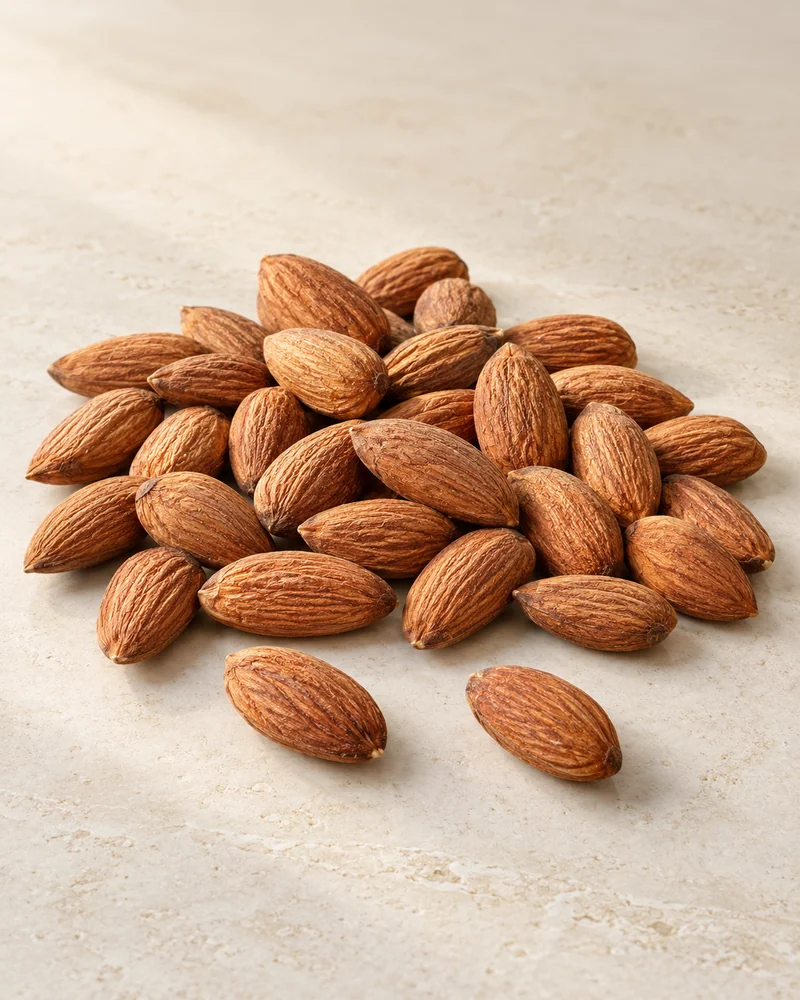
Rare Mamra kernels, paper-shell almonds and lemon-roasted classics.
3 products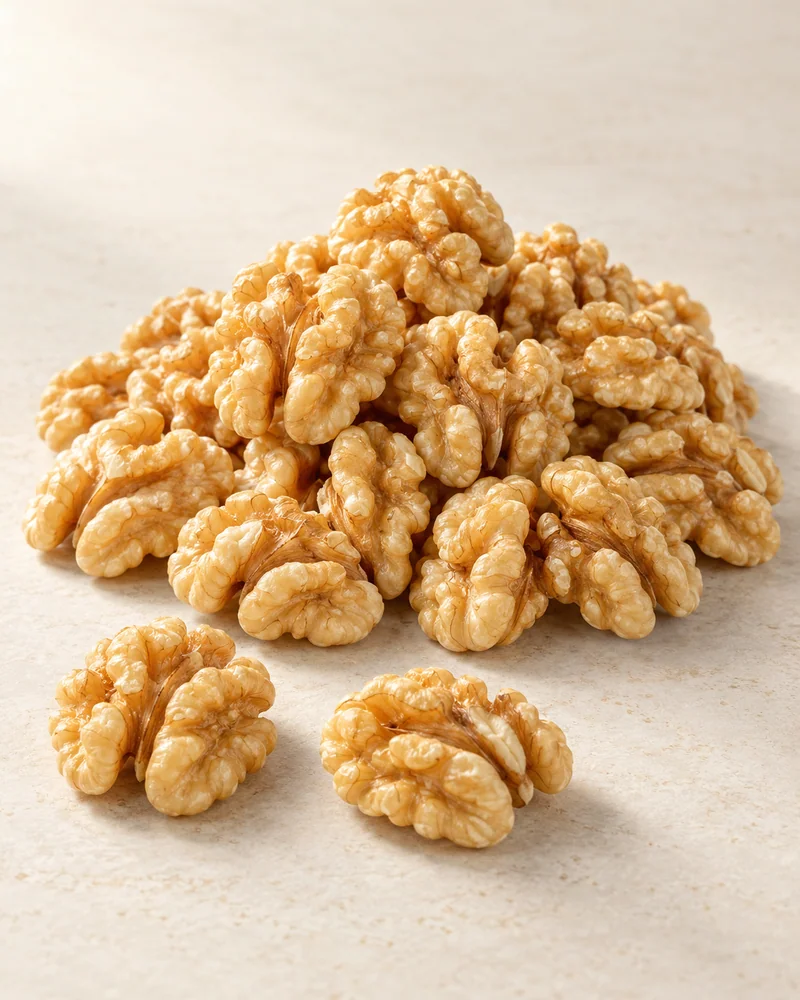
Extra Light kernels and paper-shell walnuts from Tuyserkan.
2 products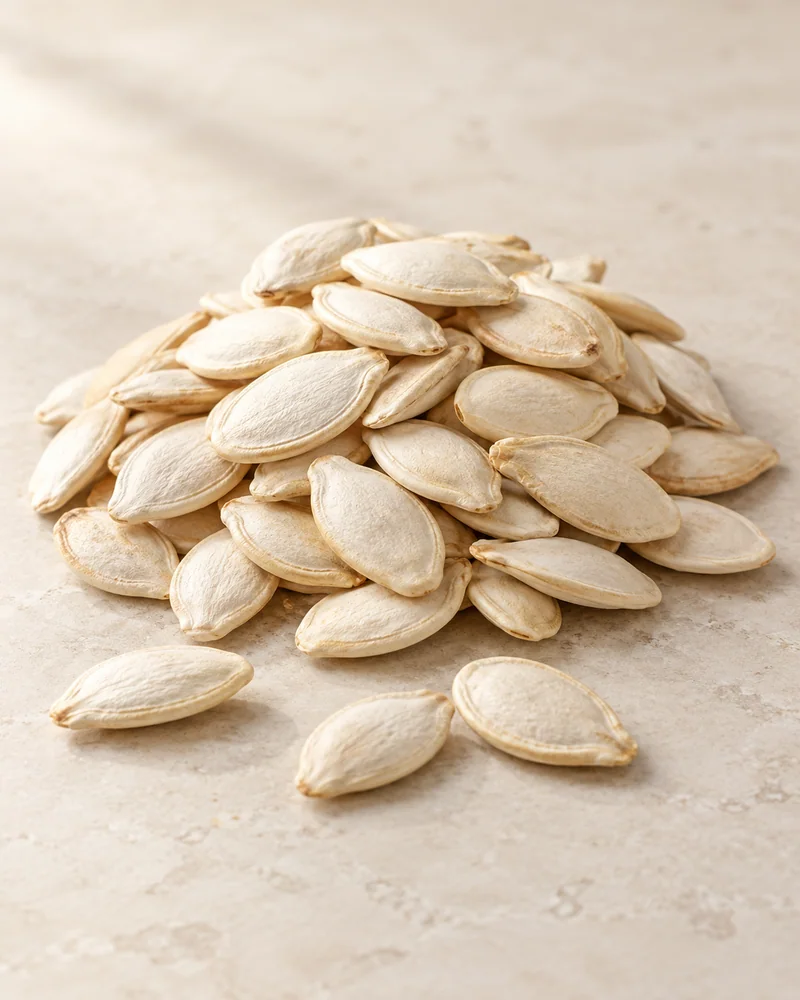
Pumpkin, watermelon and sunflower seeds, roasted Persian-style in the shell.
3 products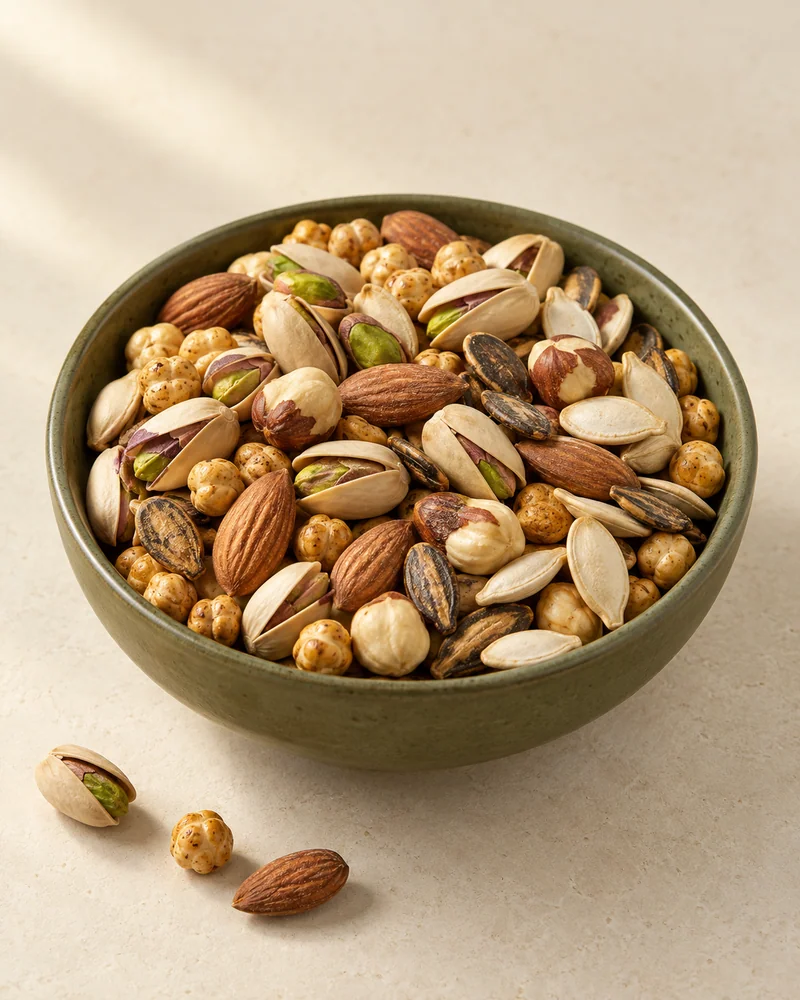
Salted, sweet and celebration ajil — hand-blended Persian mixed nuts.
3 productsReady to source?