Saffron
Persian Saffron Grades Explained: Super Negin, Negin, Sargol, Pushal & Bunch
Five grades, one flower. How Persian saffron is cut and graded, what ISO 3632 actually measures, and how to get the most from every thread.
Key takeaways
- Persian saffron grades describe how much of the stigma is kept: the less yellow style, the stronger the colour.
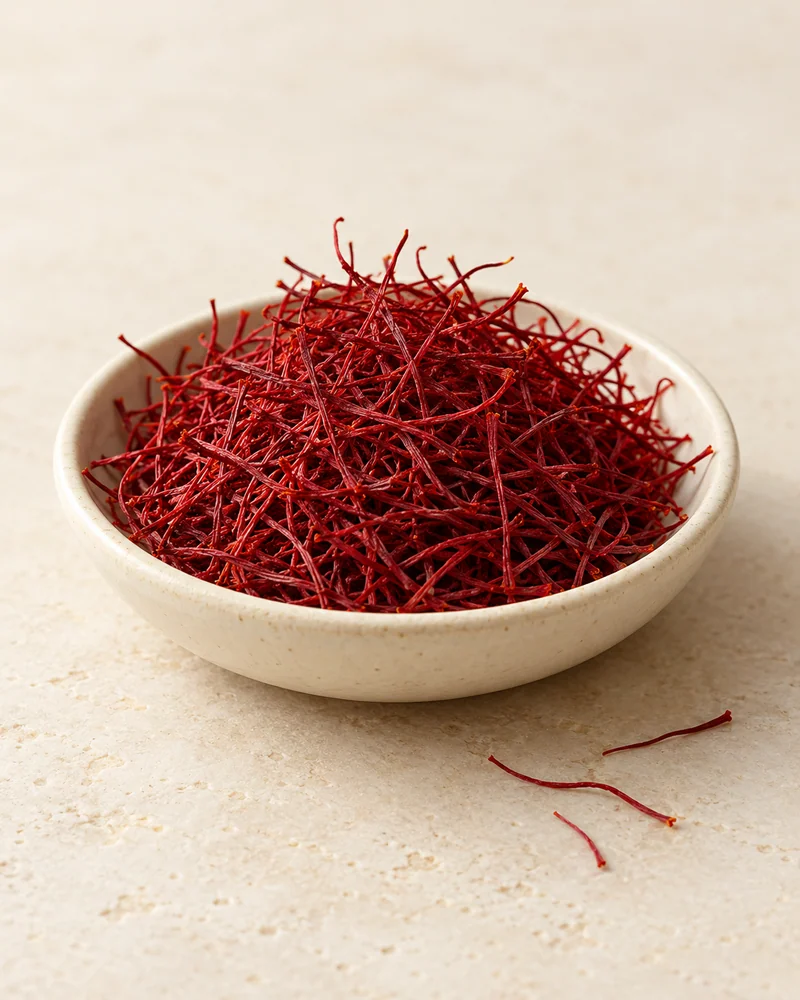
- Super Negin and Negin are long all-red threads; Sargol is all-red tips; Pushal includes some style.
- ISO 3632 grades saffron on colouring strength (crocin), bitterness (picrocrocin) and aroma (safranal).
- Always bloom saffron in warm water before cooking.
Persian saffron is sold under names that can seem baffling — Super Negin, Negin, Sargol, Pushal, Bunch. They are not brands. Each describes how the saffron thread has been cut, and that cut determines its look, its colouring strength and its price.
What saffron is
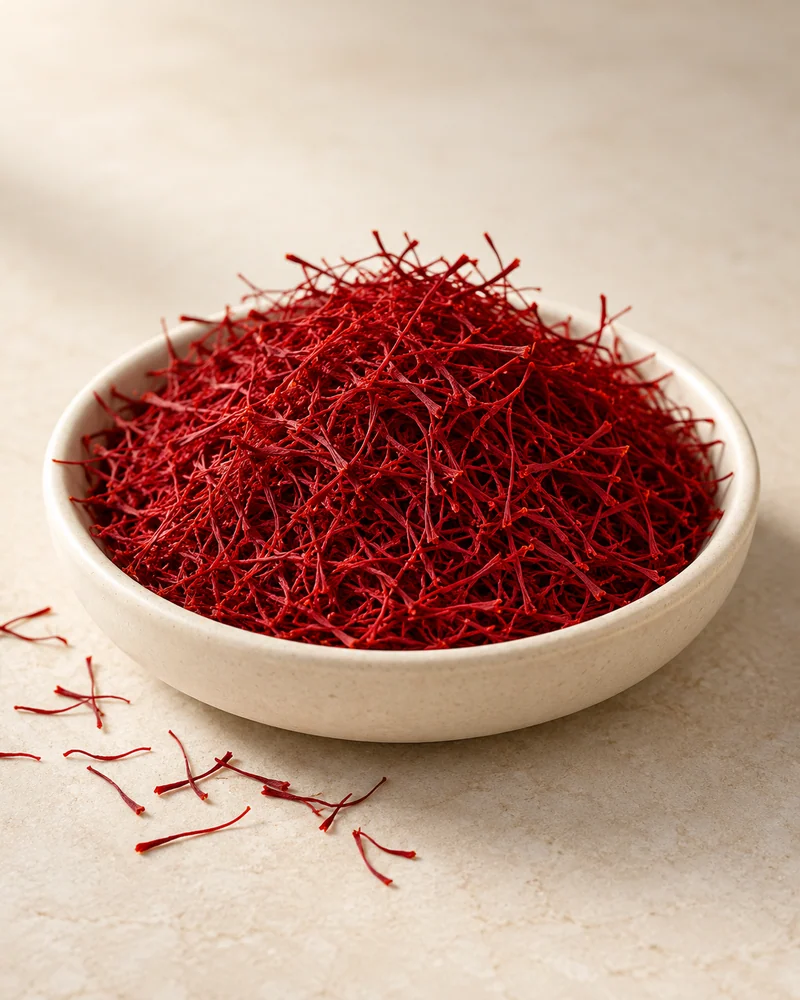
Saffron is the dried stigma of the Crocus sativus flower. Each flower has a single style that divides intothree red stigmas; below them, the style is pale yellow to white. The red stigmas carry almost all of the colour, flavour and aroma. Flowers are picked by hand at dawn during a few weeks each autumn, and the stigmas separated by hand — which is why saffron is the world’s most expensive spice.
Iran grows roughly 90% of the world’s saffron, mostly in Khorasan, around Qaen, Torbat-e Heydarieh and Gonabad.
The Persian saffron grades
| Grade | Grade meaning | What it is | Colour strength |
|---|---|---|---|
| Super Negin | Premium jewel | Longest, thickest all-red stigmas, trimmed and laid straight | Highest |
| Negin | Jewel | Long all-red stigmas, trimmed | Very high |
| Sargol | Top of the flower | Red tips only; shorter, some broken | Very high |
| Pushal | Thread with style | Red stigma with 1–3 mm of yellow style | High |
| Bunch (Dasteh) | Bunch | Whole stigma and style, tied in a small bundle | Medium–high |
| Konj | Style ends | The yellow style alone | Very low — no colour |
The rule is simple: the less yellow style, the more colour per gram. Negin and Sargol are equally “all red”; Negin simply looks more impressive because the threads are long, straight and whole.
What ISO 3632 measures
The international standard for saffron, ISO 3632, grades saffron in the laboratory on three properties, each measured by spectrophotometry:
- Colouring strength (crocin) — measured at 440 nm. The most important value for buyers.
- Bitterness / flavour (picrocrocin) — measured at 257 nm.
- Aroma (safranal) — measured at 330 nm.
The standard also sets limits for moisture, ash and foreign matter, and classifies saffron into categories, withCategory I the highest. Top Persian grades routinely meet Category I. Ask your supplier for the full ISO 3632 analysis for the lot you are buying — not a generic certificate.
How to spot fake or adulterated saffron
- The water test: drop a few threads in warm water. Real saffron releases golden-yellow colour slowly, and the threads stay red. Fakes often bleed red quickly or fall apart.
- The shape: each real thread flares into a small trumpet at one end.
- The smell: honeyed, floral and hay-like — never odourless or chemical.
- Avoid powder unless you trust the source: it is the easiest form to adulterate.
- Beware of price: saffron that is far cheaper than the market is cheaper for a reason.
How to use saffron
Saffron should be bloomed before use. Grind a pinch of threads with a sugar cube in a mortar, add 2–3 tablespoons of hot (not boiling) water — or melt an ice cube over it, a Persian trick for maximum colour — and leave for 10–20 minutes. Add the golden liquid to rice, stews, desserts or tea. About 0.1 g (roughly 20 threads) colours rice for four.
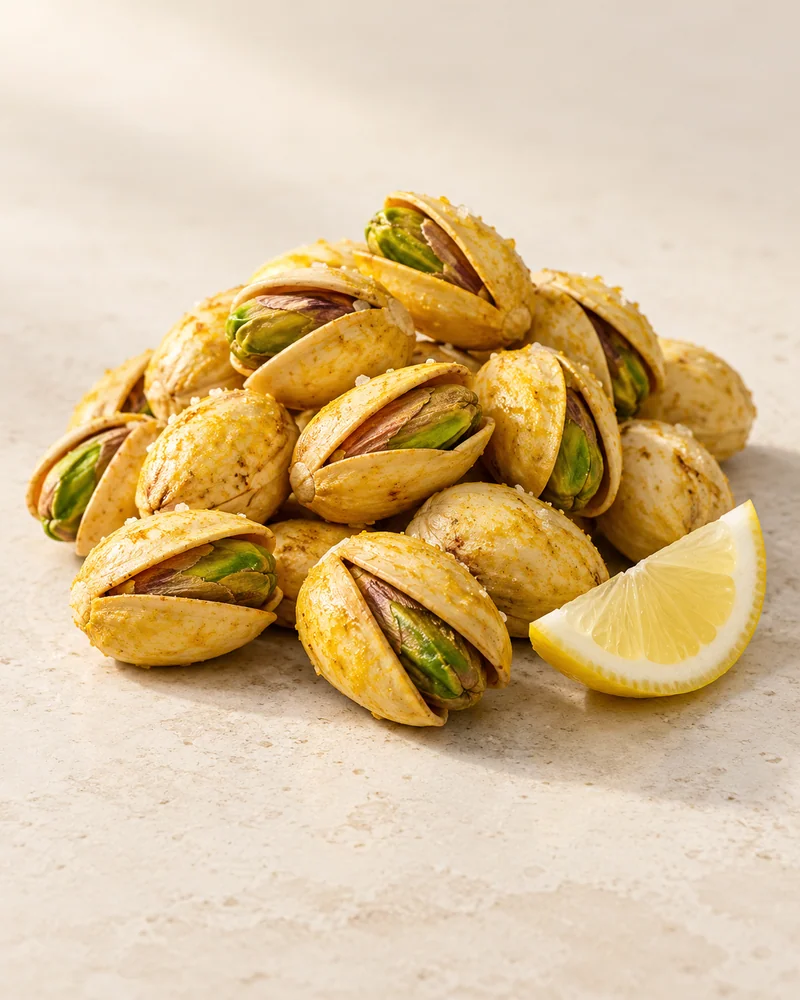
Persian classics: tahdig and saffron rice, sholeh zard (saffron rice pudding), joojeh kabab, bastani sonnati (saffron ice cream) — and saffron-roasted pistachios.
Buying saffron in bulk
For importers and packers, specify the grade, harvest year, ISO 3632 category and colouring-strength minimum in your contract, and ask for the lab report of the actual lot. Saffron is traded in grams and kilos; in Iran it is still also weighed by the traditional mesghal (4.608 g). Explore Super Negin and Sargol in our guide and enquire about availability.
First published · Last reviewed by the Nuts of Iran sourcing team in Rafsanjan, Iran.